The Price Tag That Makes People Question My Sanity
Every few months, someone asks me why I pay €100 for a gym membership when there's a perfectly good fitness chain down the street for €30.
Fair question. On paper, it makes no sense. Both have weights. Both have cardio equipment. Both are open when I need them.
But after three years of CrossFit and a decade before that of on-and-off budget gym memberships, I can tell you: they're not the same product. Not even close.
The Business Model You're Actually Buying Into
Here's something most people don't think about: budget gyms don't want you to show up.
That sounds cynical, but it's just math. Studies show that roughly 67% of budget gym members rarely or never use their memberships. The entire business model depends on people paying for access they don't use. If everyone who had a membership actually showed up, the gym would be overcrowded and unprofitable.
Your abandoned New Year's resolution is their profit margin.
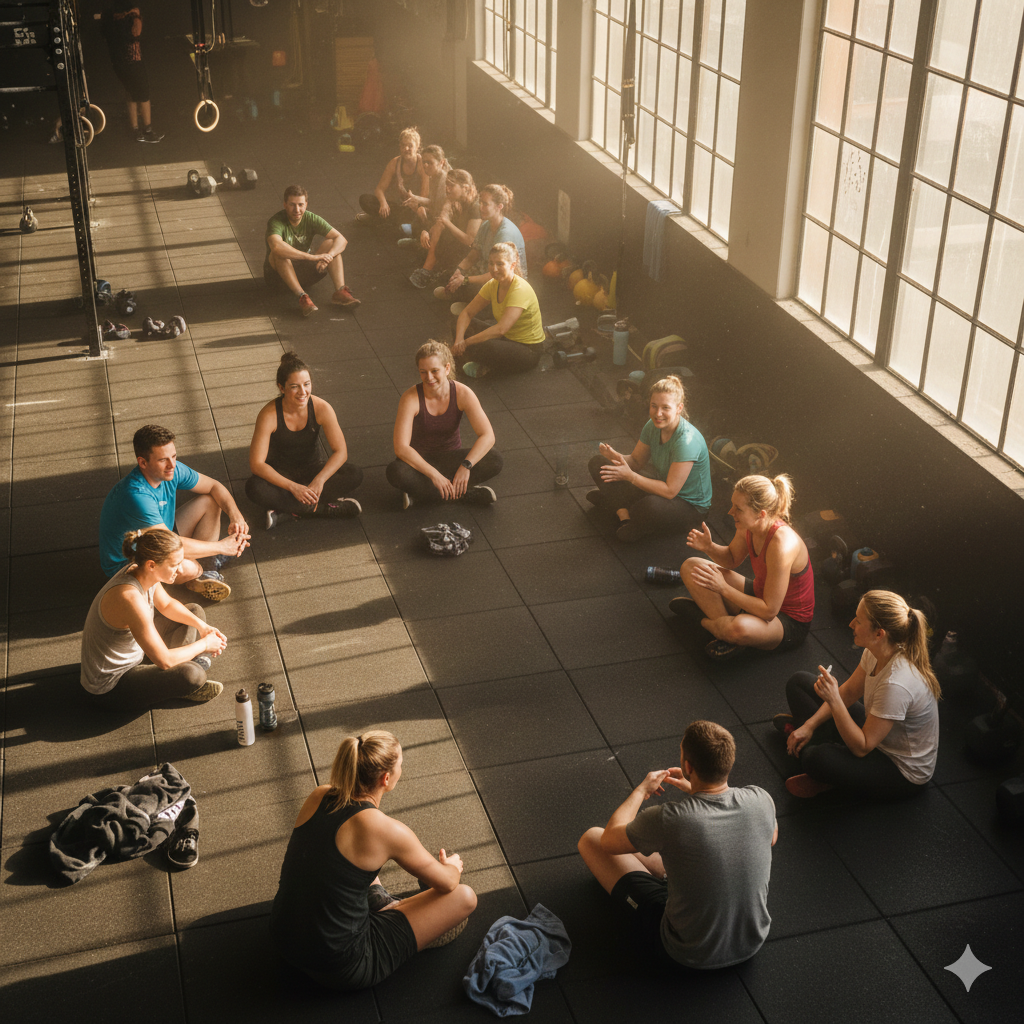
CrossFit boxes operate on the opposite model. Classes are small - usually 10 to 15 people. The coach knows your name, your injuries, your goals. If you disappear for two weeks, someone notices. Someone texts.
They need you to show up. Your presence is their retention strategy.
One model bets on your absence. The other bets on your presence.
The Accountability You Can't Put on a Spreadsheet
Let me tell you about Tuesday mornings.
At 6:30am, there are 10 of us in the box. Same crew, give or take. There's the guy who started the same month as me. The woman who always sets up next to the rig. The coach who remembers that my left shoulder gets cranky with overhead work.
When my alarm goes off at 5:45am and it's dark and cold, I don't think about my fitness goals. I think about the fact that these people expect me to be there. Skipping feels like letting them down.
That social contract doesn't exist at a budget gym. Nobody notices if you don't show up. Nobody cares. That's not a criticism - it's the design.
For some people, that anonymity is fine. They have the internal discipline to show up alone, do their workout, and leave. I'm not one of those people. Most people aren't.
The Coach Who Saves You From Yourself
Here's a cost most people never calculate: injuries.
In my budget gym days, I taught myself to deadlift from YouTube videos. I thought my form was fine. It wasn't. I spent six months with lower back pain that made it hard to pick up my kids.
At CrossFit, a coach watched my deadlift in my first week and made three small adjustments. Hip hinge timing. Bar path. Bracing sequence. Tiny changes that I never would have caught myself.
One shoulder surgery costs €5,000 to €15,000, plus months of recovery, plus physiotherapy. A coach who prevents that injury by fixing your form? That's maybe €70 per month more than the budget option.
The expensive gym membership isn't the one that costs more. It's the one that leads to an injury that sidelines you for months.
The Part Nobody Talks About: The Kitchen
Here's where CrossFit culture surprised me.
In budget gyms, nobody talks about food. You do your workout, you leave, you figure out nutrition on your own - or you don't.
In CrossFit communities, food is part of the conversation. Constantly.
After a Saturday workout, someone mentions they've been experimenting with overnight oats for quick post-workout meals. Another person shares their meal prep system - how they batch-cook proteins on Sunday to save time during the week. The coach mentions that a few members are doing a nutrition challenge next month.
These aren't formal seminars. They're just conversations that happen when you're part of a community that cares about performance.
I've picked up more practical kitchen knowledge from these casual exchanges than from any cookbook:
Quick wins I learned from the box:
- Prep vegetables on Sunday, cook proteins on Wednesday - splits the work and keeps things fresh
- Frozen cauliflower rice is a legitimate time-saver, not a compromise
- A good meal plan removes decision fatigue on busy weeknights
- High-protein breakfasts change how you feel in afternoon workouts
The nutrition conversation at CrossFit isn't about diets or restrictions. It's about fueling performance. What helps you recover faster. What gives you energy for a 6am workout. What you can actually prepare when you have 20 minutes and tired kids.
Meal Planning as a Training Variable
Here's what I've come to understand: your kitchen is part of your training.
You can have the perfect workout program, but if you're grabbing whatever's convenient for dinner, you're leaving results on the table. Meal planning isn't about being obsessive. It's about removing friction.
When I plan my meals for the week:
- I don't waste energy deciding what to cook at 7pm when I'm exhausted
- I actually eat enough protein to recover from training
- I batch the prep work so weeknight cooking takes 15 minutes, not 45
- I don't default to takeout because there's "nothing in the fridge"
The CrossFit community taught me to think about this systematically. Same way you program your workouts, you can program your meals. Not rigidly, but intentionally.
The Real Question
Budget gyms aren't bad. They work perfectly well for a specific type of person: someone who already has the discipline to show up alone, who already knows proper form, who already has their nutrition dialed in.
If that's you, save the €70 per month.
But if you've tried the budget gym route and it didn't stick - maybe more than once - it's worth asking a different question.
You didn't fail because you lacked willpower. You failed because you were buying equipment access when what you needed was a reason to show up.
Community. Accountability. Coaching. And yes, even the kitchen conversations.
Sometimes 3x the price is 10x the result.
Looking for a simple way to plan meals that support your training? That's exactly why we built PlanPlate - to make weekly meal planning fast and friction-free. Import recipes from anywhere - even TikTok - and get nutritional facts automatically calculated, even when the original source doesn't provide them. Makes tracking macros and choosing the right recipes for your goals much easier.

Ready to Transform Your Cooking?
Try PlanPlate.ai free and turn any cooking video into a perfect recipe.
Join Beta on iOS
Thanks for reading! Got questions or feedback?
Drop me a line at [email protected]